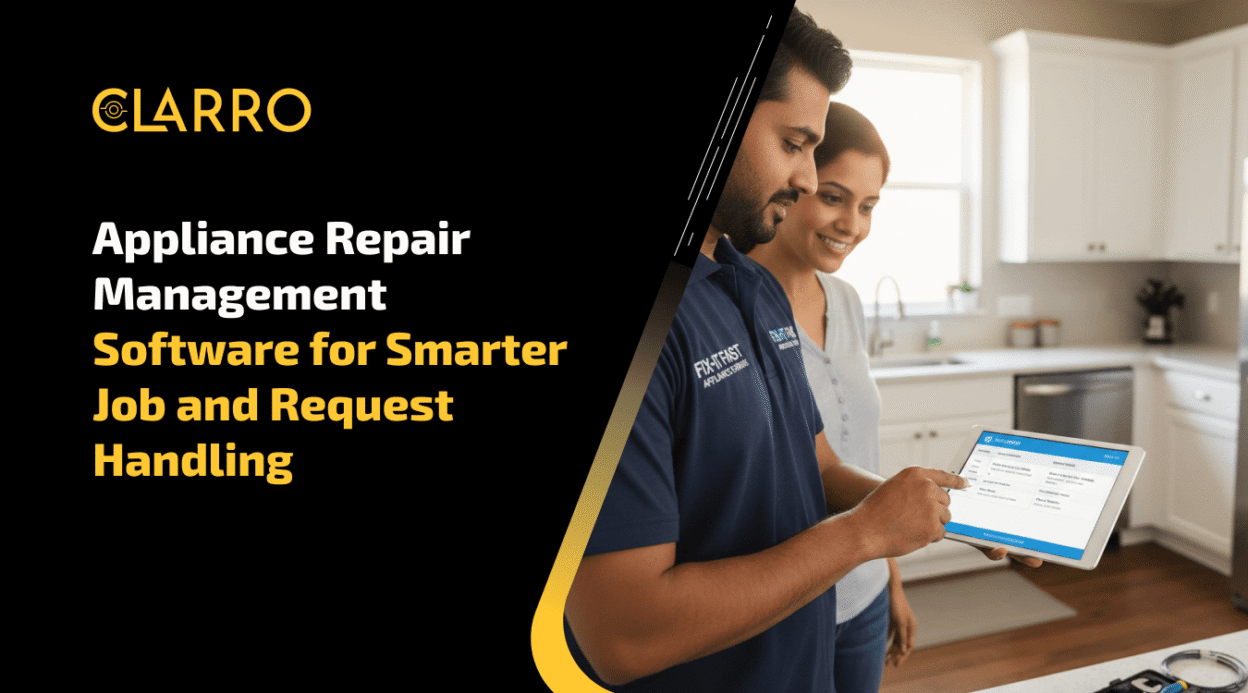
Running an appliance repair business today is no small feat. From handling multiple service requests and managing a growing team of technicians to keeping customers satisfied, the day-to-day operations can quickly become overwhelming. Many businesses still rely on manual processes like spreadsheets, phone calls, and paper logs to track jobs, which often leads to missed appointments, delayed repairs, and frustrated customers.

This is where Appliance Repair Software comes in. By centralizing job requests, automating scheduling, and providing real-time updates, this software transforms how repair businesses operate. Not only does it make managing jobs and requests simpler, but it also helps technicians work more efficiently, improves customer satisfaction, and gives business owners a clear view of their operations.
Whether you run a small repair shop or a growing home service company, adopting the right appliance service software is no longer optional; it’s essential for running a smart, organized, and profitable business.
Why Appliance Repair Businesses Need Smart Software
The appliance repair industry is evolving rapidly in 2026. Customers now expect faster service, real-time updates, transparent pricing, and seamless communication, similar to what they experience with top consumer apps. At the same time, technicians are handling more jobs and longer travel routes than ever before. Traditional manual methods cannot keep up with these demands.
This is where Appliance Repair Management Software becomes essential. Instead of relying on spreadsheets, call logs, or paper forms, smart software streamlines every part of the service workflow. It boosts efficiency, reduces errors, and improves customer satisfaction while giving business owners full control over operations.
Let us explore the key challenges businesses face without software and how modern systems solve them.
- Challenges of Manual Scheduling and Tracking
Manual scheduling is one of the biggest challenges for appliance repair businesses. When teams use calendars, phone calls, and spreadsheets to coordinate jobs, inefficiencies quickly arise. Double bookings and missed appointments become common, technicians travel inefficient routes, and dispatchers make decisions based on outdated information.
Industry studies show that businesses using automated scheduling can assign jobs more accurately, increase technician productivity, and complete more work each day. Modern repair service scheduling app for technicians automates job assignments, matches the right technician to the right task, and adjusts schedules dynamically when emergencies arise. This reduces response times, increases the number of completed jobs, and eliminates costly scheduling conflicts.
- Communication Gaps and Customer Dissatisfaction
Customers in 2026 expect complete transparency and instant updates about their service requests. When technicians’ arrival times are unclear, or customers must call multiple times to check status, frustration grows. Research from Salesforce shows that 70 percent of customers would consider switching service providers after just one poor experience.
Without software, communication is fragmented. Technicians update dispatchers manually, customers wait for information, and office staff scramble to respond to inquiries. Appliance repair management platforms solve this problem by automating customer notifications for appointment confirmations, technician arrival times, and job completion updates. Two-way messaging and real-time status updates keep customers informed and satisfied.
- Time-Consuming Administrative Tasks
Many businesses spend hours on administrative tasks that could be automated. Creating work orders, logging service history, generating invoices, and tracking parts manually takes valuable time and increases the risk of errors.
Smart job and work order management software automates repetitive tasks, such as digital work orders, electronic signatures, and instant invoicing. This allows staff to focus on higher-value tasks like customer support and technician coordination. Automation reduces paperwork, eliminates printing and scanning costs, and ensures that all records are accurate and secure.
- Limited Visibility for Business Owners
Without software, business owners have little real-time visibility into daily operations. They may not know which technician is closest to a job, whether a service request has been completed, how inventory levels are tracking, or what the overall performance metrics are. This lack of insight makes decision-making difficult and can prevent the business from meeting service level expectations.
Appliance repair management platforms provide dashboards and reports that show every job, technician, inventory level, and customer interaction in real time. This 360-degree visibility empowers owners to make informed decisions based on accurate performance data and helps identify opportunities to improve efficiency.
How Software Solves These Challenges
Modern Appliance Repair Management Software transforms these challenges into business advantages. It automates scheduling and dispatch, reducing human errors and improving technician productivity. Real-time updates keep staff and customers informed, eliminating confusion and improving satisfaction. Administrative work is streamlined with digital forms, auto-generated invoices, and cloud storage. Owners gain complete operational visibility with dashboards and analytics that help track performance and make smarter decisions.
In 2026, efficiency and convenience are not optional. Businesses that invest in smart appliance service software position themselves as industry leaders, offering faster, more reliable service while building stronger customer relationships.
Key Features of Appliance Repair Management Software
The right Appliance Repair Management Software does more than organize jobs; it transforms the entire workflow of your business. From scheduling to reporting, each feature is designed to save time, reduce errors, and improve both technician productivity and customer satisfaction. Let’s explore the most important features and how they benefit appliance repair businesses.
Centralized Job Management
A centralized dashboard allows business owners and managers to view all service requests in one place. This feature eliminates confusion and ensures no job is overlooked. Technicians, dispatchers, and office staff can all access the same information, creating a unified workflow.
Business Benefits:
- Every job is tracked from request to completion
- Reduced risk of missed or duplicated assignments
- Clear accountability for each technician
- Simplifies communication between office staff and field teams
By centralizing job management, companies can handle higher volumes of service requests without adding extra administrative overhead.
Intelligent Scheduling & Dispatch
Smart scheduling tools assign the right technician to the right job based on skill, location, and availability. Real-time routing optimizes travel, reducing downtime and fuel costs.
Business Benefits:
- Faster response times and improved first-time fix rates
- Reduced travel time and fuel expenses
- Ability to handle urgent or last-minute service requests
- Efficient technician utilization across multiple jobs
In 2026, businesses that use intelligent dispatch systems report up to a 30% increase in daily completed jobs, according to field service software studies.
Want to see how AI is transforming appliance repair operations?
Discover:- predictive maintenance and smart dispatch innovations that are reshaping the industry.
Mobile App Access for Technicians
Technicians in the field can access their schedules, job details, and customer information via a mobile app. They can update job status, add notes, capture images, and complete checklists on the go.
Business Benefits:
- Real-time updates eliminate delays in communication
- Improved accuracy in job reporting and service documentation
- Technicians spend less time in the office and more time on jobs
- Enhances technician accountability and transparency
A mobile-enabled workforce improves operational efficiency and allows businesses to scale without adding more office staff.
Customer Management & Service History
Appliance repair software stores all customer information and service history in one place. Technicians and support staff can see past repairs, recurring issues, and preferred service times. This functionality is particularly valuable when integrated with a comprehensive CRM for Service Businesses.
Business Benefits:
- Personalized customer experience increases loyalty
- Reduces repeat visits caused by incomplete service history
- Quick access to warranty or product information
- Enables targeted service reminders or promotions
By maintaining detailed service histories, businesses build stronger relationships and improve customer retention.
Automated Work Orders & Invoices
Software automates the creation of work orders and invoices. When a job is completed, the system can generate invoices instantly, send them to customers, and record payments digitally.
Business Benefits:
- Saves hours of administrative work each week
- Reduces human errors in billing
- Faster payment cycles improve cash flow
- Simplifies record-keeping for audits or tax purposes
Automation allows staff to focus on core tasks instead of paperwork, increasing overall productivity.
Real-Time Notifications & Updates
Customers and staff receive real-time notifications about job status, technician arrival times, and changes in scheduling. Alerts can be sent via email, SMS, or in-app messages.
Business Benefits:
- Keeps customers informed and satisfied
- Reduces missed appointments and service delays
- Enhances technician responsiveness and accountability
- Builds trust and transparency with clients
Providing real-time updates is crucial in 2026, as customers now expect instant visibility into their service requests.
Inventory & Parts Management
Tracking spare parts, tools, and equipment becomes easy with integrated inventory management. Businesses can monitor stock levels, reorder parts automatically, and prevent delays due to missing components.
Business Benefits:
- Avoids job delays caused by unavailable parts
- Reduces unnecessary overstocking or waste
- Tracks parts usage for better cost management
- Supports technician efficiency by ensuring they have what they need
Efficient inventory management ensures technicians can complete jobs on the first visit, improving customer satisfaction and reducing operational costs.
Analytics & Performance Reports
Comprehensive reporting tools track key metrics, such as job completion rates, technician performance, revenue, and customer satisfaction. Managers can use dashboards to identify trends and areas for improvement.
Business Benefits:
- Data-driven decision-making for better business growth
- Identify high-performing technicians and optimize schedules
- Monitor financial performance and job profitability
- Spot recurring service issues and improve operational efficiency
Analytics transform raw data into actionable insights, allowing appliance repair businesses to continuously optimize their operations and stay competitive in 2026.
How Software Improves Workflow and Efficiency
Running an appliance repair business today requires more than skilled technicians; it demands seamless coordination, fast responses, and clear communication. Relying on spreadsheets, phone calls, or paper-based logs can slow down operations, frustrate customers, and limit growth. Field service management software for repair businesses solves these challenges by transforming the entire workflow into an automated, efficient, and transparent process.
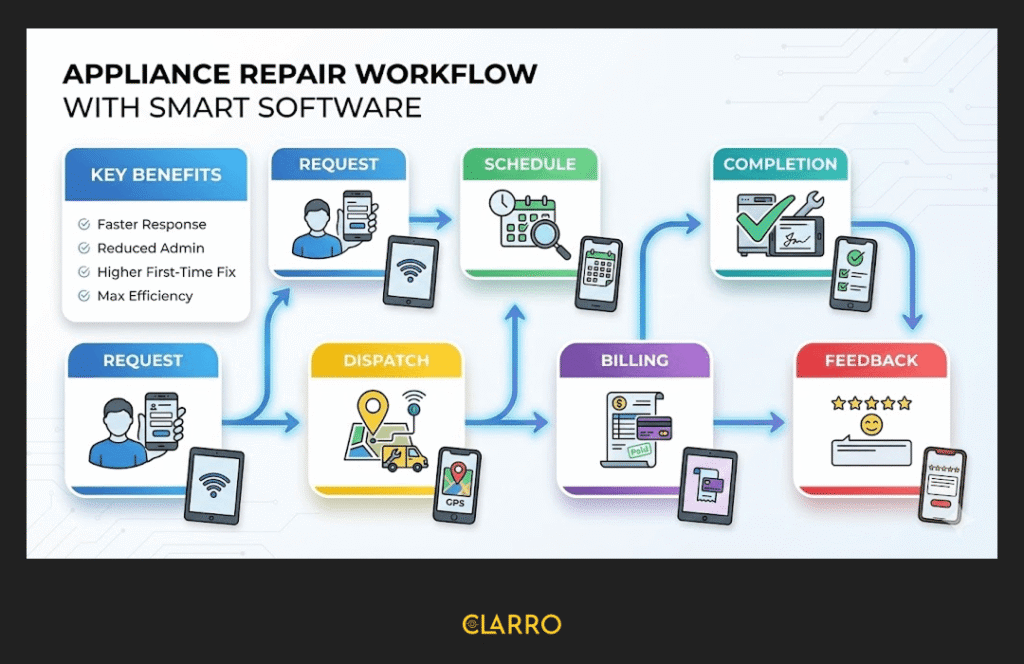
With the right software, every step of a service job, from the initial request to customer feedback, is connected and optimized, ensuring your business runs smoothly and customers stay satisfied.
Step-by-Step Workflow: Request → Schedule → Dispatch → Completion → Billing → Feedback
- Request
Customers can submit service requests via multiple channels such as websites, mobile apps, or phone calls. The software captures every request in a centralized system, prioritizes them based on urgency or type of appliance, and creates a clear, actionable job record. This ensures that no request is ever missed or forgotten.
- Schedule
Advanced scheduling tools assign the right technician to each job based on skills, location, and availability. By considering travel time, workload, and expertise, the software ensures optimal technician allocation, reduces idle time, and maximizes daily job completion.
- Dispatch
Technicians receive real-time notifications with job details, customer information, and directions. Dynamic dispatching allows managers to handle last-minute changes, emergency requests, or cancellations efficiently, ensuring faster response times and higher customer satisfaction.
- Completion
Technicians can update job status on their mobile devices, add photos, attach notes, and confirm completion instantly. This real-time documentation improves accuracy, reduces errors, and provides a clear record for both the office and the customer.
- Billing
Invoices are automatically generated and sent to customers upon job completion. Payments can be tracked instantly, reducing administrative burden and improving cash flow. Automated billing also minimizes human error and ensures consistent record-keeping.
- Feedback
Customers can provide feedback through app notifications or automated surveys. This helps businesses identify areas for improvement, maintain high service standards, and build long-term trust with clients.
Benefits of Optimized Workflow with Software
- Faster Response Times: Real-time scheduling and dispatch allow technicians to reach customers quickly, reducing wait times and boosting satisfaction.
- Reduced Administrative Burden: Automation removes repetitive tasks such as creating work orders, logging service history, and invoicing, freeing staff to focus on core business operations.
- Higher First-Time Fix Rates: Matching the right technician with the right tools ensures more jobs are completed correctly on the first visit, saving time and costs.
- Maximized Technician Efficiency: Smart routing and workload balancing help technicians complete more jobs per day without increasing stress or errors.
Modern appliance service software enables businesses to handle larger workloads with fewer resources, improve customer experience, and gain a competitive edge. In 2026, these workflow improvements are no longer optional; they are essential for growth, operational efficiency, and customer retention.
Integrations That Enhance Business Value
In 2026, running an efficient appliance repair business is not just about managing jobs—it’s about connecting every part of your operations. Modern Appliance Repair Management Software offers seamless integrations with other essential systems, ensuring that your business runs smoothly, errors are minimized, and time is saved across all departments. These integrations allow your business to operate as a unified ecosystem rather than as disconnected processes.
Let’s explore the most impactful integrations and how they add real value to your business.
CRM Integration
Integrating a Customer Relationship Management (CRM) system with your appliance repair software allows you to store all customer data in one place. This includes service history, contact details, preferences, and feedback.
Benefits:
- Provides a 360-degree view of every customer, enabling personalized service
- Helps track repeat issues and warranty information
- Simplifies follow-ups and promotional campaigns
- Improves customer satisfaction and loyalty
According to industry studies, businesses with CRM-integrated field service software report up to 25% higher customer retention due to better communication and personalized service.
Accounting Software Integration
Integration with accounting platforms such as QuickBooks or Xero automates financial processes, including invoicing, payment tracking, and reporting.
Benefits:
- Eliminates double data entry and reduces human errors
- Ensures accurate, real-time financial records
- Speeds up billing and improves cash flow
- Simplifies tax filing and compliance
By connecting your appliance service software to your accounting tools, businesses save hours every week while ensuring financial transparency and accuracy.
Inventory Management Integration
Managing parts and tools is critical for appliance repair. Inventory integration allows your software to track stock levels, automatically reorder items, and allocate parts to specific jobs.
Benefits:
- Prevents delays due to missing parts
- Reduces overstocking and unnecessary inventory costs
- Ensures technicians have the right parts for each job
- Improves operational efficiency and first-time fix rates
In 2026, businesses leveraging inventory-connected software report a 20–30% reduction in service delays caused by unavailable parts.
Communication Platforms (SMS/Email) Integration
Integrating SMS, email, or in-app messaging keeps both customers and technicians informed at every stage of the job. Notifications can include appointment reminders, technician arrival times, or status updates.
Benefits:
- Enhances customer experience by keeping them informed
- Reduces missed appointments and service cancellations
- Enables quick internal communication among team members
- Builds trust and transparency with clients
Automated notifications reduce phone calls and manual updates, allowing your team to focus on delivering excellent service.
How Integrations Save Time and Reduce Errors
The combined effect of these integrations is transformational. By connecting CRM, accounting, inventory, and communication systems:
- Administrative work is minimized
- Data duplication and errors are virtually eliminated
- Technicians have access to accurate information at all times
- Managers gain real-time visibility into operations
For modern appliance repair businesses, these integrations are not just convenience features; they are critical tools for increasing efficiency, reducing costs, and providing a seamless experience for both staff and customers. As customer expectations continue to rise, many businesses are also exploring On-Demand Service App Development to offer app-based booking and real-time service tracking that meets modern consumer demands.
Choosing the Right Appliance Repair Software
With so many options available, picking the right Appliance Repair Management Software can feel overwhelming. The software you choose will influence your team’s productivity, customer satisfaction, and long‑term growth. In 2026, businesses must evaluate software not just on price but on usability, adaptability, and ecosystem integration.
Below are the key criteria every appliance repair business should consider when evaluating management software:
Ease of Use
The best repair software should be intuitive and simple for both office staff and technicians to adopt. A complicated interface can slow down onboarding and reduce adoption, which means your team may not use the software to its full potential.
Look for:
- A clean dashboard with clear navigation
- Minimal training required before use
- Helpful onboarding tutorials or support
Many field service solutions emphasize user experience; for example, platforms like Housecall Pro and Jobber are known for being easy to use right from day one.
Why it matters:
When staff can use the software confidently without frustration, you spend less time troubleshooting and more time improving service delivery.
Mobile Functionality
In a field‑driven business, technicians spend most of their day away from the office. A strong mobile app ensures they have access to job details, customer history, parts availability, and directions, all without returning to base.
Features to look for include:
- Offline access for areas with weak network coverage
- Easy job updates from the field
- GPS navigation and route guidance
Solutions like Fieldproxy and Housecall Pro offer powerful mobile apps that help technicians stay effective even when they are on the road.
Why it matters:
Mobile functionality empowers technicians to work more independently and reduces delays caused by back‑and‑forth communication with the office.
Customizable Workflows
Every appliance repair business has its unique processes. Some may need specific checklists for diagnostic steps, others may require custom approval flows, recurring maintenance plans, or specialized reporting.
Perfect software should offer workflow customization so you can:
- Tailor job forms and checklists
- Automate repetitive steps
- Set business‑specific rules for approvals
Custom workflows allow you to align the software with your actual business processes instead of forcing your business to adapt to rigid software logic. Similar principles apply across service industries—businesses using Auto Repair Service Software also benefit from customization that matches their specific diagnostic and repair workflows.
Pricing & Subscription Models
Software pricing varies widely. Some platforms charge per technician, which can become costly as your team grows. Others offer flat pricing or tiered plans that include unlimited users.
Here’s a snapshot of typical pricing ranges for appliance repair and field service platforms:
| Software | Pricing (Starting) | Ideal For | Best Feature |
| ServiceWorks | From $79/month | Small to medium repair teams | Full suite including dispatch & inventory |
| Jobber | From $29/month | Small service businesses | CRM + scheduling |
| Workiz | From $187/month | Growing field service teams | Automation & reporting |
| Fieldproxy | Custom flat pricing | Scalable & AI‑focused | AI route optimization |
| Housecall Pro | ~$49/month/user | Small–mid teams | Ease of use & customer communication |
| RazorSync | ~$89/month | Budget‑minded small businesses | Simple scheduling |
Price isn’t everything. More expensive software may offer powerful automation and analytics, while affordable options can be perfect for smaller teams just starting digital transformation.
Customer Support & Updates
Reliable customer support is a must. Look for vendors that provide:
- Live chat or phone support
- Onboarding assistance
- Knowledge base with tutorials
- Frequent feature updates
Good support means you spend less time waiting for help and more time solving real business issues.
Optional Table: Top Software at a Glance
Here’s a quick comparison of popular appliance repair software options that many small to mid‑sized repair businesses choose in 2026:
| Software | Best For | Key Strengths | Pricing Model |
| ServiceWorks | All‑in‑one field service solution | Dispatch, scheduling, and inventory | Subscription |
| Jobber | Small business | CRM, scheduling, invoicing | Per user/platform plan |
| Workiz | Workflow automation | Reporting & integrations | Per user/device |
| Fieldproxy | Growth‑oriented teams | AI scheduling, unlimited users | Flat pricing |
| Housecall Pro | Mid‑sized team | Intuitive UI, customer communication | Per user plan |
| RazorSync | Affordable scheduling | Simple mobile access | Subscription |
This table highlights not just pricing, but also what each solution excels at, helping you match software to your business needs.
In Summary
Choosing the right software means looking beyond basic features and considering how it fits your team, goals, and plans. You want a solution that is easy to use, supports your mobile workforce, adapts to your processes, scales with your business, and comes with dependable support.
Investing time in selecting the right appliance repair management software now will pay dividends in efficiency, profitability, and customer satisfaction in the years ahead.
Real-World Benefits & ROI
Investing in Appliance Repair Management Software is more than just upgrading your tools; it is an investment in efficiency, customer satisfaction, and long-term business growth. Businesses that implement smart software, such as solutions offered through Clarro, see measurable improvements in productivity, revenue, and operational performance.
Let’s explore the tangible benefits and return on investment (ROI) for appliance repair businesses in 2026.
Time Saved Per Week/Month
Manual scheduling, paperwork, and coordination often require hours of work every day.
Real Data:
- On average, businesses report 10–15 hours saved per week on administrative tasks.
- Automating work orders, invoicing, and technician communication reduces repetitive tasks by up to 60%.
Benefit: Time savings enable staff to focus on revenue-generating activities, such as serving more customers or optimizing technician schedules.
Increased Completed Jobs
Smart scheduling and optimized dispatch directly impact the number of jobs completed. Intelligent routing, skill-based assignments, and real-time updates reduce idle time and improve first-time fix rates.
Real Data:
- Businesses using advanced appliance repair software often see 20–30% more jobs completed per technician per week.
- First-time fix rates improve by up to 15–20%, reducing follow-up visits and travel time.
Benefit: More completed jobs mean higher revenue without increasing staffing costs.
Improved Customer Satisfaction
Customers in 2026 expect transparency, speed, and convenience.
Real Data:
- Businesses report a 25–40% increase in customer satisfaction scores after implementing modern field service software.
- Automated notifications and real-time tracking reduce missed appointments by up to 50%.
Benefit: Satisfied customers are more likely to provide positive reviews, repeat business, and referrals, which boosts long-term revenue.
Reduced Operational Costs
Operational costs are lowered through efficiency, automation, and better resource utilization. Less time spent on manual tasks and fewer errors translate into significant cost savings.
Real Data:
- Fuel and travel costs drop by 10–20% due to optimized routing.
- Administrative overhead can decrease by 15–25% as paperwork and manual processes are automated.
- Inventory management integration prevents unnecessary overstocking or shortages, reducing waste.
Benefit: Reduced costs increase profitability while maintaining high service standards.
Mini Case Study: Smart Appliance Repair Transformation
Challenge: Many appliance repair businesses face missed appointments, slow communication, and overworked technicians.
Solution: Implementing modern appliance repair management software from Clarro with mobile access, automated scheduling, and integrated service tracking effectively resolves these challenges.
Results After 6 Months:
- Weekly administrative time reduced by 12 hours
- Jobs completed per technician increased by 25%
- Customer complaints dropped by 40%
- Operational costs reduced by 15%
This example demonstrates how Clarro helps businesses improve workflow, increase productivity, and achieve higher ROI, enabling faster, more reliable, and customer-focused service.
Conclusion:
Adopting Appliance Repair Management Software is no longer just a convenience—it’s a strategic necessity for modern appliance repair businesses. By automating scheduling, dispatch, and administrative processes, this software enables teams to work smarter, respond faster, and focus on delivering high-quality service.
The impact is measurable: increased efficiency, higher first-time fix rates, reduced operational costs, and stronger customer satisfaction. Investing in the right software equips your business to handle more jobs, optimize technician performance, and grow sustainably. In a competitive market, it’s the key to running a more organized, profitable, and customer-focused appliance repair business in 2026 and beyond.
Want to Continue Your Journey
Want to calculate your actual ROI before making a purchase? See real-world payback timelines →
FAQs:
1. What is appliance repair management software?
It’s a digital tool that helps businesses manage service requests, schedule technicians, track jobs, handle inventory, and generate invoices. It reduces manual work, improves accuracy, and boosts overall efficiency.
2. Can it integrate with other systems?
Yes. It can connect with accounting software and CRM systems to automate invoicing, maintain accurate customer records, and simplify reporting, saving time and reducing errors.
3. Is it suitable for small businesses?
Absolutely. Small teams benefit from automated scheduling, workflow management, mobile access for technicians, and centralized records, improving efficiency and customer satisfaction.
4. How mobile-friendly is it for technicians?
Very mobile-friendly. Technicians can receive jobs, update status, add notes or photos, and access customer info from smartphones or tablets, even offline, ensuring faster, more accurate service.