For service businesses, keeping a client is often more valuable than finding a new one. Loyal customers spend more, book services regularly, and refer others, forming the backbone of steady growth. That’s why customer retention strategies matter; they help businesses nurture relationships, deliver consistent service, and encourage clients to return.
Retaining clients also creates predictable revenue, allowing businesses to plan, reduce marketing costs, and focus on improving the customer experience. Technology makes this easier: CRM systems track preferences, online booking and scheduling streamline appointments, and automated reminders keep clients engaged, all while maintaining a personal touch.
In this blog, we’ll explore how successful service businesses build repeat customers and stable revenue, the strategies they use, and practical tips you can apply to your own business.
Why Retaining Customers is More Valuable Than Acquisition
For service businesses, keeping clients loyal is often more profitable than constantly finding new ones. One way to measure this is through Customer Lifetime Value (CLV), the total revenue a client brings over their relationship with your business. A loyal client who books monthly cleaning services, regular home maintenance, or recurring beauty treatments generates far more revenue over time than a one-time customer.
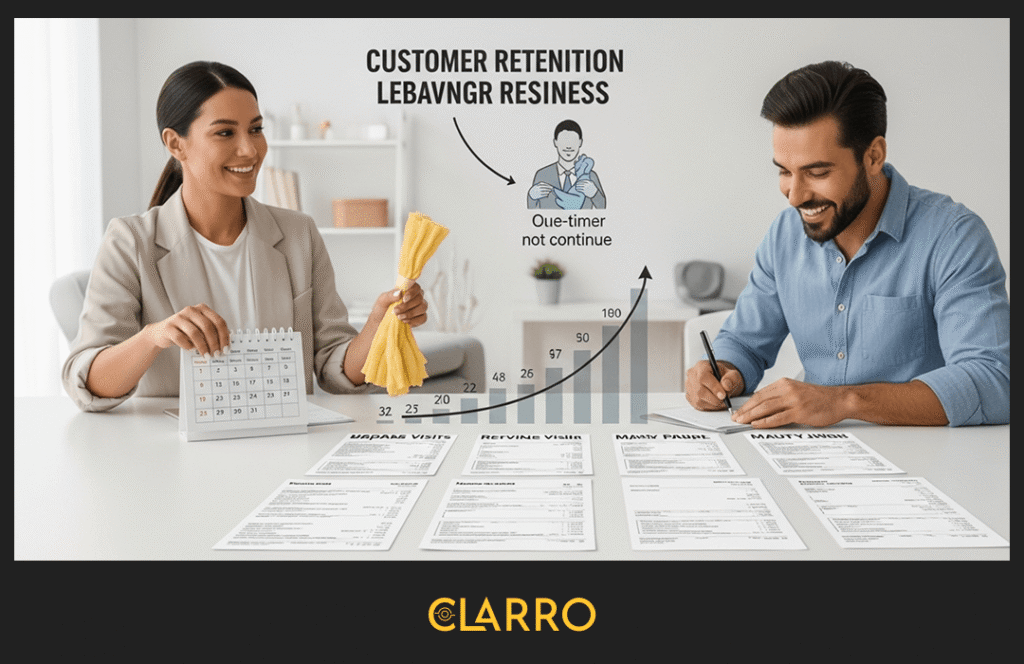
Here’s why focusing on retention makes sense:
- Lower Costs: Acquiring a new client can cost up to five times more than retaining an existing one. Marketing campaigns, ads, and promotions require money, time, and effort. Retention strategies, on the other hand, rely on nurturing relationships and providing consistent service, which is far more cost-effective.
- Predictable Revenue: Repeat customers create a stable cash flow. A beauty salon with a membership program or a cleaning company offering recurring packages can forecast income and plan resources efficiently.
- Reduced Marketing Pressure: When clients return regularly, businesses spend less on acquisition and more on improving service quality and customer satisfaction.
Real-world examples:
- A home services company offering annual maintenance contracts sees consistent monthly revenue.
- A cleaning business using automated reminders for recurring bookings reduces no-shows and increases repeat customers.
- A beauty salon with loyalty rewards keeps clients engaged and ensures steady appointments even in slower months.
Technology makes retention easier and more effective. CRM systems track client history and preferences, enabling personalized communication, while automated tools like scheduling software and follow-up reminders keep clients engaged without extra effort. For example, a field service business using a CRM can alert clients when routine maintenance is due, ensuring they return on schedule. Using Recurring Service Plans Software helps businesses automate scheduling and maintain consistent client engagement.
By prioritizing retention over constant acquisition, service businesses save money, foster loyalty, and secure stable revenue, all while freeing time to focus on growth and delivering exceptional service.
Core Customer Retention Strategies for Successful Service Businesses
For service businesses, retaining clients is far more profitable than constantly chasing new ones. Research shows that acquiring a new customer can cost up to five times more than keeping an existing one, while loyal clients often spend up to 67% more over time. Implementing strong customer retention strategies ensures businesses not only maintain a steady flow of repeat customers but also create predictable revenue that allows for better planning and growth.
1. Deliver Consistent, High-Quality Service
The first step in client retention is providing reliable, professional, and high-quality service every single time. Whether it’s a home cleaning visit, a field maintenance job, or a beauty appointment, clients expect consistency. Standardized workflows ensure that services are delivered efficiently and without mistakes, which builds trust over time.
For example, a cleaning company that follows a consistent checklist for every appointment reduces errors and keeps clients happy. Similarly, a beauty salon maintaining the same level of attention and professionalism in every session ensures clients keep coming back. Consistency signals reliability, and reliability drives loyalty.
2. Make Booking and Rebooking Effortless
Second, simplifying how clients schedule and reschedule services encourages repeat business. With online booking software, clients can book appointments anytime, anywhere, without calling or emailing. Automated reminders reduce missed appointments, while one-click rebooking makes returning as easy as possible.
For instance, a field service company that sends automatic reminders for maintenance appointments sees fewer cancellations, while a beauty salon that allows clients to rebook their favorite stylist in one click enjoys higher retention rates. Salon Management Software for Modern Studios streamlines this entire process, making rebooking effortless for clients. Convenience is a major driver of repeat bookings.
3. Personalize Customer Interactions
Personalization creates meaningful connections. Using a custom CRM system, businesses can track customer preferences, past services, and feedback to tailor interactions.
- Targeted messaging: Send promotions based on the services clients regularly use.
- Feedback-driven service: Adjust offerings based on client input to show responsiveness.
- Segmentation: Group clients by service type, frequency, or location for relevant communication.
A field service company, for example, can notify clients when routine maintenance is due, ensuring timely visits while showing clients they are valued. Personalization enhances loyalty and encourages repeat bookings.
4. Implement Loyalty Programs and Incentives
Fourth, loyalty programs and incentives encourage clients to return regularly. Memberships, referral rewards, or package deals provide extra value to repeat customers.
For example, a cleaning company offering “book five sessions, get one free” not only encourages repeat bookings but also motivates clients to refer friends and family. Similarly, a beauty salon offering discounted packages for recurring services ensures clients commit to multiple appointments.
5. Follow Up After Every Service
Finally, post-service follow-ups maintain engagement and trust. Sending thank-you messages, requesting feedback, or reminding clients of their next appointment keeps your business top-of-mind.
A salon that sends a reminder, “Time for your next facial?” increases repeat bookings, while a home service company that follows up on completed maintenance builds credibility and shows clients they are valued.
By combining these five strategies- consistent service, easy booking, personalized interactions, loyalty incentives, and thoughtful follow-ups- service businesses create a system that naturally increases repeat customers and drives predictable revenue. Leveraging CRM tools and automated scheduling software makes it easier to implement these strategies efficiently, ensuring no client is overlooked.
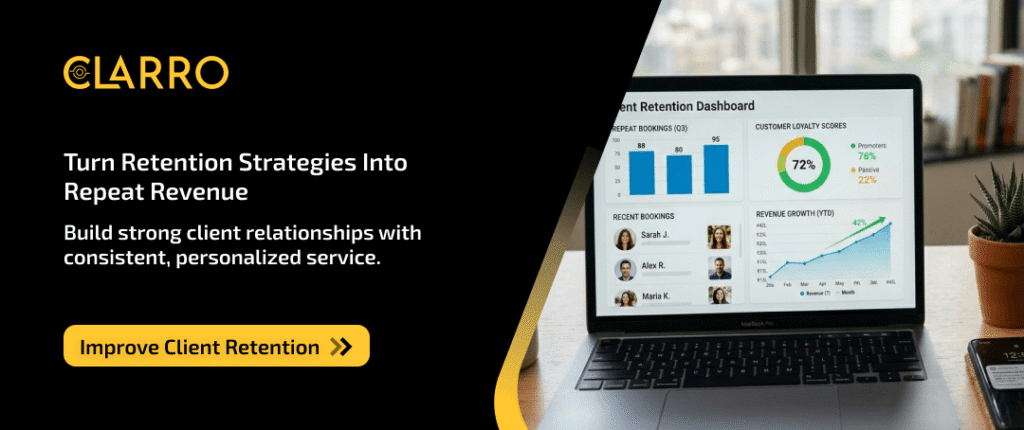
How Repeat Customers Lead to Predictable Revenue
For service businesses, repeat customers aren’t just loyal, they’re the foundation of stable, predictable income. When clients return consistently, businesses can forecast cash flow, plan resources efficiently, and scale operations with confidence. There are three key approaches that successful service businesses use to convert repeat customers into predictable revenue.
1. Subscription and Membership Models
One of the most effective ways to stabilize revenue is through subscription or membership programs. Monthly or quarterly recurring services, such as routine home cleaning, maintenance visits, or beauty treatments, create a reliable flow of income. Clients benefit from convenience and discounted pricing, while businesses gain a predictable schedule of bookings.
For example, a cleaning company offering a monthly subscription for regular home cleaning ensures a steady stream of appointments, even during traditionally slow months. Similarly, a beauty salon with a quarterly membership for facials and hair treatments keeps stylists booked and revenue consistent. Subscriptions reduce reliance on new client acquisition and help businesses plan their finances with confidence.
2. Service Packages and Tiered Pricing
Bundling services into packages or tiered pricing models encourages clients to commit to multiple appointments or services in advance. This approach increases the average revenue per client while providing value to loyal customers.
For instance, a home maintenance company might offer an annual package that includes seasonal checkups, plumbing inspections, and emergency visits. Clients pay upfront or in installments, giving the business predictable revenue while clients enjoy convenience and peace of mind. Similarly, a beauty business offering tiered packages, basic, premium, and VIP, can upsell services while rewarding repeat clients.
3. Scheduling Recurring Appointments in Advance
Planning recurring services ahead of time further enhances revenue predictability. By setting appointments in advance, businesses can minimize gaps between bookings, ensure staff availability, and manage resources efficiently.
A lawn care company, for example, scheduling weekly or bi-weekly visits for the season, reduces fluctuations in revenue and creates a smooth workflow for employees. Job management software makes it easy to schedule, track, and manage these recurring appointments efficiently. Likewise, cleaning or beauty services that encourage clients to book their next appointment immediately after the current one maintain momentum and strengthen long-term loyalty.
By combining subscriptions, service packages, and recurring appointment scheduling, service businesses transform repeat customers into predictable revenue streams. These strategies not only increase financial stability but also build stronger client relationships, improve operational planning, and reduce the constant pressure of acquiring new clients.
With tools like automated scheduling software and CRM systems, businesses can implement these strategies efficiently, track recurring bookings, and ensure every client receives timely, personalized service.
Leveraging Technology to Strengthen Customer Retention

In today’s competitive service industry, offering excellent service alone is no longer enough to retain clients. Technology has become a key differentiator, helping businesses manage relationships, streamline operations, and provide a personalized experience that keeps clients coming back. By leveraging the right tools, service businesses can implement effective customer retention strategies and create predictable revenue streams.
- CRM for Tracking Customer Interactions
A Customer Relationship Management (CRM) system allows businesses to track every interaction with their clients, from service history to preferences and feedback. This data enables businesses to deliver tailored experiences that make clients feel valued and build lasting client relationships. For example, a cleaning company can track which rooms or areas a client prioritizes, while a beauty salon can record a client’s preferred stylist and past treatments. These insights help businesses offer personalized recommendations, reminders, and promotions, fostering loyalty and repeat business.
CRMs also provide a central hub for staff, ensuring every team member has access to the same client information. This consistency in service builds trust and reduces errors, which is essential for long-term retention.
- Online Booking and Scheduling Software
Modern clients value convenience, and seamless booking is a major factor in retention. Online booking and scheduling software allows clients to book appointments anytime, without the need for calls or emails. Automated confirmations and reminders reduce no-shows, while one-click rescheduling makes it easy for clients to adjust their appointments.
For instance, a field service business that offers online scheduling can see higher client satisfaction and repeat bookings compared to competitors relying on manual scheduling. This frictionless process ensures clients remain engaged and return regularly.
- Automated Marketing: Reminders, Follow-Ups, and Promotions
Automation takes retention efforts to the next level. Automated marketing tools can send personalized reminders for upcoming services, follow-ups after completed appointments, and targeted promotions based on client preferences.
A home maintenance company, for example, can automatically notify clients when seasonal maintenance is due. At the same time, a beauty salon can send a promotion for a client’s favorite service around their birthday. These automated touchpoints keep your brand top of mind and encourage repeat business without requiring additional manual effort. An automated follow-up system can handle these communications seamlessly, ensuring no client falls through the cracks.
- Real-World Example: Clarro’s Tools
Platforms like Clarro combine CRM, online booking, and automated marketing into one easy-to-use system. For cleaning companies, beauty salons, or home service providers, Clarro helps:
- Track customer interactions and preferences
- Send timely reminders and follow-ups
- Reduce missed appointments and increase repeat bookings
- Boost revenue while maintaining personal client engagement
By integrating CRM, online scheduling, and automated marketing, service businesses can strengthen customer relationships, retain clients more effectively, and turn repeat customers into predictable revenue. Technology doesn’t replace personal service; it enhances it, making retention simpler, more consistent, and more profitable.
Real-World Success Stories
Seeing theory in action makes it clear why customer retention strategies are essential for service businesses. Across industries like home services, cleaning, and beauty, businesses that prioritize repeat clients see measurable improvements in revenue, client loyalty, and cash flow stability.
- Home Services: Recurring Maintenance Programs
A home maintenance company implemented recurring maintenance packages, offering quarterly inspections and seasonal services. By encouraging clients to schedule appointments in advance, the business reduced gaps between jobs and created a predictable workflow for technicians. Within six months, the company saw a 40% increase in repeat bookings and a 25% rise in predictable revenue, allowing for better staffing and resource planning.
- Cleaning Services: Subscription Plans and Loyalty Rewards
A mid-sized cleaning business introduced monthly subscription plans with built-in loyalty rewards. Clients who booked recurring cleanings received discounts and referral bonuses. This not only incentivized repeat bookings but also attracted new clients through word-of-mouth referrals. Over a year, the business reported 50% more repeat clients and a 30% boost in annual revenue, demonstrating the power of structured retention strategies.
- Beauty and Wellness: VIP Memberships
A beauty salon launched a VIP membership program, offering exclusive access to services, priority bookings, and personalized offers for loyal clients. Members received reminders for recurring treatments and tailored promotions based on past preferences. As a result, the salon achieved higher retention rates, with members scheduling 2–3 appointments per month on average, significantly increasing predictable cash flow and overall revenue.
These examples show a consistent pattern: when service businesses focus on creating convenient, personalized, and rewarding experiences, clients are more likely to return. From recurring maintenance in home services to subscription cleaning plans and VIP memberships in beauty, the outcomes are measurable—more repeat customers, stable revenue, and improved forecasting. Whether you’re looking to build your service platform from scratch or enhance an existing service marketplace platform, the key is implementing the right technology to support your retention strategy.
Investing in thoughtful retention strategies, supported by technology and clear processes, transforms one-time clients into loyal advocates, turning short-term engagements into long-term growth.
Key Metrics to Measure Customer Retention Success
For service businesses, measuring the effectiveness of customer retention strategies is essential to improve performance and drive predictable revenue. Tracking the right metrics allows companies to understand client behavior, optimize processes, and grow sustainably.
- Repeat Customer Rate: This metric shows the percentage of clients who return for another service. A higher repeat rate indicates strong loyalty and effective retention practices. For example, a cleaning business tracking repeat bookings can identify which clients prefer recurring services and tailor promotions accordingly.
- Customer Lifetime Value (CLV): CLV measures the total revenue a client generates throughout their relationship with your business. By focusing on increasing CLV, businesses can invest more efficiently in retention programs that yield long-term returns.
- Churn Rate: The percentage of clients lost over a specific period. Monitoring churn helps businesses identify service gaps or dissatisfaction. For instance, a salon noticing a high churn after a seasonal promotion can adjust offers or communication strategies to retain clients.
- Average Booking Frequency: Understanding how often clients schedule services helps businesses plan resources, forecast revenue, and predict cash flow more accurately.
By regularly tracking these metrics, service businesses can refine retention efforts, personalize offers, and anticipate client needs. The insights gained not only improve client satisfaction but also contribute to service business growth and consistent revenue.
Common Mistakes in Customer Retention
Even the best service businesses can struggle to keep clients loyal if they make avoidable errors in their retention approach. Understanding these common pitfalls is essential for maintaining repeat customers and achieving sustainable growth.
1. Neglecting Post-Service Follow-Up
Failing to follow up after completing a service can make clients feel undervalued. Simple gestures like thank-you messages, feedback requests, or reminders for upcoming appointments reinforce trust and encourage repeat business. Without follow-ups, clients may drift to competitors who stay engaged.
2. Inconsistent Communication and Service Quality
Reliability is critical in service industries. Missed appointments, unclear communication, or inconsistent service can quickly erode client trust. For example, a cleaning business that occasionally skips promised tasks or arrives late may lose even its most loyal customers. Maintaining consistent, professional service strengthens relationships and builds loyalty.
3. Relying on Manual Scheduling and Processes
Manual booking systems, spreadsheets, or phone-only appointments increase the risk of errors, double bookings, or missed opportunities. Automation through online scheduling tools reduces friction, ensures appointments are never overlooked, and provides a smoother experience that encourages repeat bookings.
4. Ignoring Personalization and Customer Data
Treating all clients the same can limit loyalty. Service businesses that fail to track preferences, past services, or feedback miss opportunities to tailor offers and communications. Personalization, like remembering a client’s preferred stylist, recurring maintenance needs, or service frequency, enhances satisfaction and keeps clients returning.
5. Overlooking Incentives and Engagement Programs
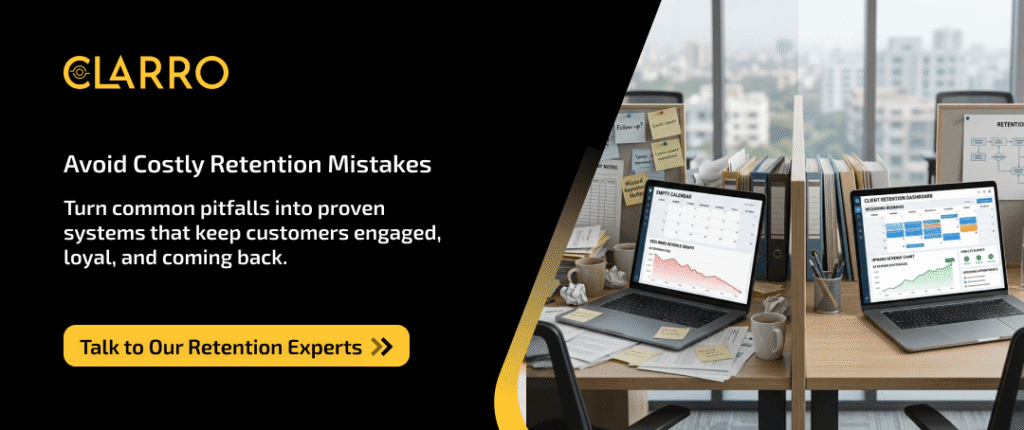
Some businesses neglect loyalty programs, referrals, or special promotions that reward repeat clients. Without these incentives, clients have little reason to commit long-term, reducing retention rates and predictable revenue.Avoiding these mistakes is crucial for successful customer retention strategies. By staying consistent, using technology effectively, personalizing experiences, and actively engaging clients, service businesses can strengthen relationships, retain more customers, and grow revenue predictably.
Conclusion:
Keeping clients coming back is the key to building a thriving service business. Customer retention strategies, like delivering consistent quality, offering loyalty programs, personalizing communication, and using automation, turn one-time clients into loyal advocates and drive repeat customers, which directly leads to predictable revenue.
The benefits are clear: businesses that focus on retention see higher repeat bookings, improved client lifetime value, and more stable cash flow. Technology makes these strategies easier to implement. Tools like Clarro’s CRM, online booking, and scheduling software help track client preferences, automate reminders, and simplify repeat appointments, keeping your business efficient and clients satisfied.
For field service businesses looking to optimize operations further, Modern FSM software improves fix rates, enhances customer experience, and lowers service costs.
Dive into the complete FSM guide to learn more about maximizing efficiency and retention.
Investing in retention isn’t just smart, it’s essential for growth. Start using Clarro’s tools today to build stronger client relationships, increase repeat bookings, and achieve predictable revenue with less effort.
FAQs:
1. What are the best strategies to keep clients coming back?
The most effective strategies include delivering consistent quality service, personalizing client communication, offering loyalty programs, and using automation for bookings and reminders.
2. How do repeat customers help my business grow?
Repeat customers increase revenue predictability, reduce marketing costs, and often refer new clients, making them more profitable than constantly acquiring new ones.
3. Can technology really improve customer retention?
Yes. Tools like CRM systems, online booking software, and automated marketing help track preferences, streamline appointments, and maintain consistent engagement.
4. What metrics should I track to measure retention success?
Key metrics include repeat customer rate, customer lifetime value (CLV), churn rate, and average booking frequency to understand loyalty and improve services.
5. How can loyalty programs boost repeat bookings?
Rewarding clients through memberships, referral bonuses, or package deals encourages repeat business and strengthens long-term relationships.