
quick summary
In 2026, how to run a home service business is about more than completing jobs; it’s about building efficient systems, managing skilled technicians, and streamlining invoicing and payments. Modern businesses leverage automation, smart scheduling, and clear workflows to deliver consistent service, scale without losing quality, and stay ahead of customer expectations. From local operations to multi-location expansion, a structured approach ensures higher productivity, satisfied customers, and sustainable growth.
Understanding How a Home Service Business Operates
A home service business delivers essential on‑site services directly at a customer’s location rather than from a fixed storefront. In 2026, these businesses are increasingly defined not just by the services they offer but by how efficiently they manage jobs, technicians, customer interactions, and digital systems.
Unlike traditional service models that rely heavily on phone calls and manual scheduling, modern home service businesses operate through structured workflows covering everything from online booking and dispatch to job tracking and invoicing. This operational clarity is what separates scalable businesses from those stuck in daily chaos.
According to industry projections, the global home services market, including plumbing, electrical, cleaning, HVAC, and other in‑home repairs, is expected to expand rapidly, reaching an estimated USD 1.86 trillion in 2026 as demand continues to rise for convenient, on‑demand service delivery.
Q: What Defines a Home Service Business in 2026
In 2026, a home service business is defined by mobility, responsiveness, and operational efficiency. Customers expect faster response times, real-time updates, and transparent pricing, while business owners need tighter control over labor costs, schedules, and profit margins.
Key characteristics of a modern home service business include:
- On-site service delivery at residential or commercial properties
- Technician-led operations, where field teams are the core workforce
- Appointment-based jobs, often time-sensitive or emergency-driven
- Digital-first processes for scheduling, communication, and payments
With rising competition and higher customer expectations, businesses that rely solely on spreadsheets or manual coordination struggle to keep up. Those who adopt structured systems for managing work and teams gain a clear operational advantage.
Q: Common Home Service Business Categories
Home service businesses span a wide range of industries, but most fall into a few high-demand categories that continue to grow in 2026 due to aging home infrastructure, increased homeownership, and consumer preference for convenience.
Some of the most common service categories include:
- Cleaning services – residential and commercial cleaning, deep cleaning, post-construction cleanup
- HVAC services – maintenance, repair, and installation of heating and cooling systems
- Plumbing services – leak repairs, pipe installations, drainage, and emergency plumbing
- Electrical services – wiring, lighting installation, panel upgrades, and safety inspections
Each category has different pricing structures and job durations, but all rely on efficient scheduling, skilled technicians, and consistent service quality to remain profitable in a competitive marketplace.
For a deeper look at the technology powering modern service platforms, explore our guide on app development for home service businesses.
Q: Local vs Multi-Location Home Service Business Models
Most home service businesses begin as local operations, serving a specific city or region. Local businesses benefit from faster response times, a tighter community reputation, and lower marketing costs. Local search presence on platforms like Google Business Listings and strong online reviews play a major role in customer acquisition at this stage.
As demand grows, many businesses expand into multi-location models, operating across multiple cities or broader service regions. While this creates new revenue opportunities, it also adds complexity, including more technicians, overlapping schedules, and higher coordination needs.
The key operational difference lies in scale:
- Local models focus on tight scheduling, personalization, and repeat customers
- Multi-location models require standardized processes, centralized dispatching, and efficient customer support systems
In 2026, successful expansion depends less on adding more technicians and more on building systems that can handle growth without breaking daily operations.
Why This Understanding Matters
Understanding how a home service business operates lays the foundation for everything that follows, from job scheduling and technician management to invoicing and long-term growth. Without a clear operational model, even high-demand services struggle to remain profitable and organized.
This is why the next sections will focus on simplifying workflows, supporting technicians, and creating efficient billing systems, the real drivers of success for home service businesses today.
Building the Right Foundation Before You Scale
Before a home service business can grow sustainably, it needs a rock‑solid foundation. Many service businesses fail not because they lack demand, but because they skip critical planning steps, such as understanding their market, setting up proper financial systems, and choosing the right legal structure. In 2026, the companies that win are those that combine strong operational planning with smart technology adoption to manage jobs, teams, and cash flow with confidence.
At Clarro, scaling a home service business starts not with more leads, but with better clarity, structure, and systems.
Identifying Your Target Market and Service Area
Understanding who your ideal customers are and where they live is essential before you invest in marketing, hiring, or tools. Simply put, you can’t grow if you don’t know who you are growing for.
Who are your customers?
- Homeowners needing routine maintenance
- Renters looking for affordable services
- Commercial properties needing regular service contracts
In 2026, local search remains the primary way customers find home services online. According to BrightLocal, 78% of consumers use search engines to discover local businesses, and positive online reviews significantly influence booking decisions. This means you should know not only what services your customers want, but also how they search and decide before contacting you.
How to define your market:
- Review local demographic data to understand income levels, household types, and age groups.
- Use Google Business Insights and local SEO tools to see where demand is highest.
- Analyze competitor presence to find underserved neighborhoods where Clarro can capture customers first.
When you know your target market clearly, every marketing dollar works harder, and every job booked is a step toward scalable growth.
Choosing a Business Structure That Supports Growth
Choosing the right legal structure for your home service business affects your taxes, liability exposure, and ability to bring on partners or investors. It’s a critical early decision that shapes your business flexibility.
Here are common structures that Canadian businesses use:
Sole Proprietorship
- Easiest setup with minimal red tape
- Owner assumes full liability
- Best for solo operators just starting
Partnership
- Shared ownership and combined expertise
- Liability is shared among partners
- Good for co‑founded operations
Corporation
- Provides limited liability protection
- Easier to raise capital or bring in partners
- Ideal for businesses aiming to scale beyond a single region
For most emerging home service businesses in Canada, incorporating as a corporation offers a strong balance of legal protection and future growth potential. Consult with an accountant or legal advisor to choose the best option for your situation.
Writing a Practical Business Plan
A business plan does not have to be a long, academic document to be valuable. In fact, the most useful plans are short, actionable, and directly tied to execution.
A practical business plan should include:
- Business Overview – What services you will offer and why.
- Market Summary – Data about your customers, competition, and service area.
- Service Packages – Clear pricing tiers and service descriptions.
- Operations Roadmap – Processes for receiving jobs, scheduling technicians, and managing quality.
- Financial Model – Costs, revenue forecasts, break‑even targets, and profitability milestones.
At Clarro, we encourage home service owners to revisit this plan quarterly, so it evolves with the business, not just gathers dust.
Setting Up a Business Bank Account and Finances
Separating personal and business finances is more than bookkeeping hygiene. It protects your business’s financial integrity and prepares you for growth.
Essential financial steps:
- Open a business bank account to separate revenue and expenses.
- Get a business credit card for managing operational costs.
- Use reliable accounting software like QuickBooks, Xero, or FreshBooks to track income and expenses in real time.
- Set aside a tax reserve account so you are never caught off guard.
According to the Canadian Federation of Independent Business, nearly one‑third of small businesses struggle with cash flow issues each year. A solid financial foundation helps you manage slow periods, invest in new tools like handyman service software, and make data‑backed decisions about hiring, pricing, and expansion.
Why This Foundation Matters
Without clear market insights, proper legal structure, and financial discipline, a home service business is at risk the moment demand grows. These early steps help you build a resilient operation that can handle booking volume, scale technician teams, and deliver quality service consistently.
By investing time now in understanding your customers, defining your business structure, and setting up disciplined financial systems, you will be far better positioned to grow Clarro‑powered operations with confidence.
How to Run a Home Service Business Efficiently Day-to-Day
Running a home service business is about more than completing jobs; it’s about creating a system that ensures operations flow smoothly, technicians stay productive, and customers receive consistent, high-quality service. In 2026, efficiency comes from combining clear workflows, thoughtful prioritization, and strong leadership to keep the business running reliably every day.
Designing Simple Operational Workflows
At the heart of daily operations are simple, well-designed workflows. These workflows act as a roadmap for every job, guiding tasks from the initial booking to service completion and payment. Keeping processes straightforward allows technicians to work efficiently without confusion, while regular review and adjustments ensure the workflow evolves as the business grows. Documenting workflows also helps new employees get up to speed quickly and ensures consistency across different teams and locations.
Balancing Service Quality with Speed
Delivering quality service at a reasonable speed is equally important. Customers expect timely solutions without compromising the outcome. Standardizing key procedures, creating checklists for common tasks, and strategically prioritizing urgent jobs allows businesses to maintain a balance between speed and quality.
Tracking metrics such as completion times, customer feedback, and technician efficiency gives valuable insight for improvement. Investing in regular training helps your team handle tasks correctly the first time, minimizing mistakes and the need for repeat visits.
Setting Clear Expectations as a Business Owner
Equally essential is setting clear expectations as a business owner. When everyone understands their responsibilities and service standards, operations run more smoothly. Communicating guidelines for safety, customer interactions, and quality ensures the team can perform confidently and independently. Regular feedback and coaching help maintain consistency and accountability, while leading by example reinforces professionalism and work ethic across the team.
Maintaining transparent communication with customers is also critical to efficiency. Clear appointment confirmations, updates on arrival times, and post-service follow-ups improve customer satisfaction and reduce last-minute scheduling conflicts. A self-service customer portal for job updates and payments empowers customers to track their service requests, view invoices, and make payments independently, reducing administrative workload while improving customer satisfaction.
Key practices for running daily operations efficiently include:
- Streamlining workflows from booking to completion to minimize errors
- Standardizing tasks with checklists to maintain consistent service quality
- Prioritizing urgent jobs while efficiently managing routine tasks
- Tracking key performance metrics for continuous improvement
- Setting clear expectations for technicians and staff
- Maintaining transparent communication with customers throughout the process
When workflows are clear, service standards are maintained, expectations are well communicated, and customers are kept informed, a home service business operates efficiently and predictably.
This allows business owners to focus less on daily firefighting and more on growth, customer retention, and long-term profitability.
Simplifying Job Scheduling and Service Execution
One of the biggest operational challenges for a home service business is managing incoming work and turning requests into completed, profitable jobs. Inconsistent scheduling, overbooking, and missed appointments can quickly erode customer trust and reduce revenue. In 2026, businesses that organize incoming service requests and execute schedules intelligently will stand out from the competition and build stronger customer relationships.
Effective job scheduling and execution not only improve technician productivity but also create predictable daily operations that allow business owners to plan growth with confidence.
Organizing Incoming Service Requests
Efficient service delivery starts with collecting and organizing customer requests clearly. Whether a customer calls, books online, or submits a request through email or social media, every inquiry should flow into a central system for tracking and assignment. A 24/7 online booking system enables customers to schedule appointments at their convenience while automatically organizing requests for your team.
In 2025, data shows that 63% of customers expect businesses to acknowledge their service request within 24 hours, and responsiveness directly impacts booking conversions.¹ When requests are scattered across different platforms or agents, response times lag, and opportunities are lost.
To organize incoming service inquiries effectively:
- Use a unified communication log where calls, forms, and messages are captured in one place
- Prioritize requests based on urgency and customer value to reduce stress on technicians
- Confirm receipt quickly with customers to set expectations early
A structured request handling process ensures you never miss an inquiry and that every job is visible and actionable.
Source: Customer Service Statistics 2025
Smart Job Scheduling to Reduce Downtime
Once requests are organized, the next step is intelligent scheduling. Smart job scheduling software ensures that technicians spend more time servicing and less time waiting, driving both efficiency and profitability.
Good scheduling balances technician skill sets, locations, and job requirements. This avoids long travel times between jobs and reduces idle periods that waste labor costs.
In modern home service operations:
- Block schedules by geography to minimize travel
- Assign jobs based on technician certifications and experience
- Build in buffer time around complex or unpredictable work
Forward-looking businesses also use data from past jobs to estimate how long similar work takes, helping to reduce overruns and late arrivals. By minimizing gaps between appointments, you maximize technician productivity and customer satisfaction.
Avoiding Overbooking and Missed Appointments
Even the most skilled team will underperform if the schedule is chaotic. Overbooking leads to stressed technicians and hasty work, while missed appointments frustrate customers and harm your reputation.
To prevent scheduling conflicts:
- Limit the number of bookings per time slot based on realistic job durations
- Use automated reminders via text and email to reduce no‑shows
- Confirm appointments the day before to allow for timely changes
- Monitor technician progress in real time to adjust plans proactively
Establishing these practices reduces the risk of missed commitments and shows customers that your business values their time. Responding professionally even when changes are necessary reinforces trust and encourages repeat business.
Why Efficient Scheduling and Execution Matter
Simplifying job scheduling and service execution ensures that your business runs like a well‑tuned machine. When requests are organized, scheduling is intelligent, and conflicts are minimized, customers experience reliability, technicians stay productive, and owners can scale operations with confidence.
Effective scheduling is not just logistics — it is a core growth strategy that impacts customer satisfaction, technician retention, and overall profitability.
Managing Technicians Without Micromanaging
In a home service business, technicians are your frontline ambassadors. They are the ones interacting directly with customers, solving problems in real time, and shaping the reputation of your brand through their work quality and professionalism. Balancing oversight with autonomy is key. Good leaders empower technicians without constantly hovering over every task.
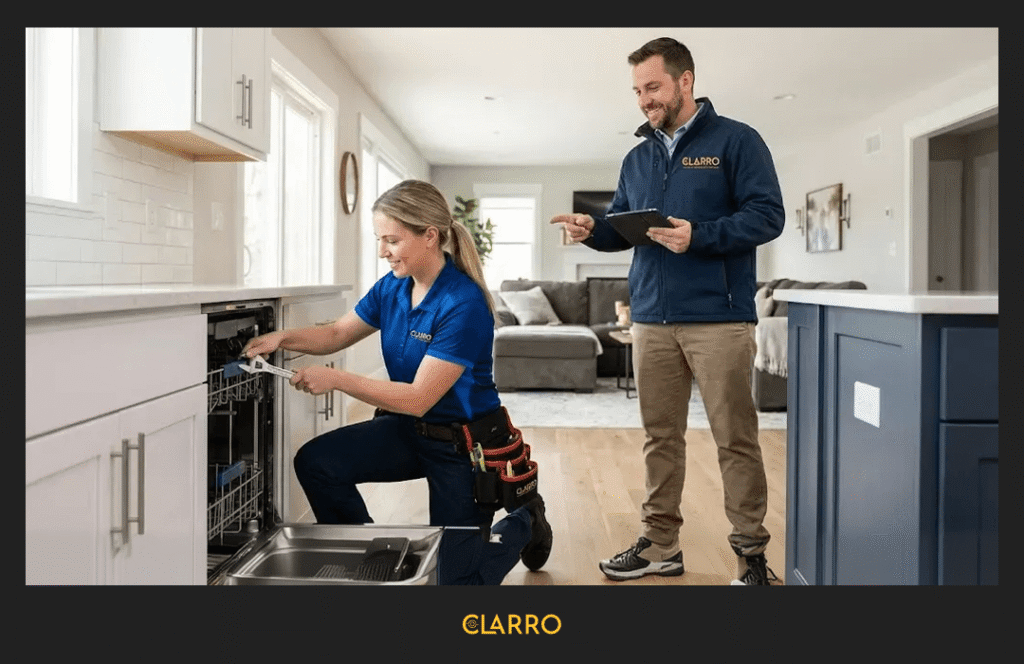
In 2026, successful businesses treat technician management as a strategic leadership practice rather than a routine supervisory burden, which boosts morale, improves efficiency, and reduces turnover.
Assigning Jobs Based on Skills and Location
Assigning the right technician to the right job isn’t just logistical; it’s a performance multiplier. Matching work to skill level ensures jobs are completed correctly and quickly, while considering geographic proximity reduces travel time and fuel costs.
For example, a technician trained in HVAC diagnostics should be prioritized for complex HVAC repairs instead of general maintenance work, while newer technicians might handle routine tasks as they gain experience.
To see how software can simplify scheduling, dispatch, and technician management, explore our detailed HVAC field service management guide.
Smart scheduling based on skills and location leads to:
- Faster response times
- Increased first‑time fix rates
- Reduced technician fatigue
- Higher customer satisfaction
The goal isn’t just to fill schedules; it’s to optimize deployment so technicians deliver value efficiently.
Improving Technician Productivity in the Field
Productivity in the field starts with clarity. Technicians perform best when they understand:
- What the customer expects
- What tools and parts are needed
- How long is the job expected to take
Regular feedback, realistic performance targets, and training opportunities reinforce confidence and competence. Encouraging technicians to log time and job outcomes accurately also gives leadership real data to identify bottlenecks or training needs.
In addition, efficient route planning and minimizing non‑productive time, such as waiting for materials or clarifying instructions, directly impact productivity. Field teams that work with clear expectations in a predictable system tend to be significantly more productive than those left to guess priorities.
Communication Tools That Actually Work
Communication is the glue that holds a distributed field team together. Without reliable channels, technicians can feel isolated, customers may be left uninformed, and office teams lose visibility into job progress.
The most effective communication tools go beyond basic phone calls. Text updates, automated alerts, and real‑time status boards help everyone stay aligned. For example, sending arrival time notifications or job completion messages keeps customers in the loop, while on‑site photo uploads help managers verify outcomes without unnecessary back‑and‑forth.
A strong communication system should:
- Enable real‑time updates between the office and the field
- Provide customers with accurate timing expectations
- Track job status transparently for accountability
Empowering technicians with the right communication tools reduces misunderstandings and builds stronger internal workflows and customer trust.
Invoicing, Payments, and Cash Flow Made Simple
Managing finances well is just as important as managing operations. Even perfectly executed service jobs won’t grow your business if billing is delayed, payment options are limited, or cash flow is unpredictable. In 2026, integrating invoicing, payments, and pricing strategies into a cohesive system can dramatically improve profit margins and customer experience.
Creating Clear, Professional Invoices
Invoices are more than just bills; they are a reflection of your business’s credibility. A poorly formatted or confusing invoice can delay payments, frustrate customers, and damage your professional image. With invoice management software, you can automate the billing process and ensure every invoice is accurate, professional, and sent on time.
Effective invoices should include:
- The service provided a clear description
- Itemized labor and materials
- Total amount due with tax breakdown
- Payment due date and payment methods accepted
- Business contact information
Professional invoices not only look polished but also reduce customer confusion and accelerate payment cycles.
Accepting Credit Cards and Digital Payments
In today’s digital economy, many customers prefer paying by credit card or digital wallets. Not offering flexible payment options can delay transactions and create friction at the final step of service delivery.
By accepting credit cards and popular digital payment methods:
- You improve convenience for the customer
- You reduce the chances of overdue payments
- You increase the likelihood of repeat business
Research shows that offering credit card payments significantly increases customer satisfaction and reduces the average time to payment, which in turn improves cash flow and reduces accounting overhead.
Pricing Strategy That Protects Profit Margins
Pricing is one of the most strategic decisions a home service business makes. Setting prices too low erodes profit margin and undervalues your expertise, while pricing too high can limit demand. A strong pricing strategy balances market rates, operational costs, and perceived value.
Consider the following when setting prices:
- Cost of labor and materials – Know your break‑even point
- Market benchmarks – Understand what competitors charge in your region
- Service complexity – Charge more for specialized or emergency work
- Profit margin goals – Aim for sustainable profitability, not just revenue
Transparent pricing builds trust with customers and gives your business the financial stability it needs to grow.
Common Operational Mistakes Home Service Businesses Make
Even well-established businesses can struggle if foundational systems are ignored. Operational mistakes can cause inefficiency, customer dissatisfaction, and lost revenue. Understanding these pitfalls helps home service business owners streamline operations before small problems escalate.
Relying on Manual Tracking
Tracking jobs, schedules, and payments manually may work when a business is small, but it quickly becomes inefficient as demand grows. Spreadsheets and paper logs are prone to errors, missed updates, and miscommunication, which can delay services and frustrate both technicians and customers.
Automated tracking and scheduling systems reduce mistakes, save time, and provide real-time visibility into operations, a necessity for scaling in 2026.
Poor Communication Between Office and Field
Ineffective communication is a major source of operational breakdown. When office staff, dispatchers, and field technicians aren’t aligned, jobs can be delayed, instructions misunderstood, and customers left waiting.
Implementing real-time updates and reliable communication channels ensures that everyone is informed and coordinated, preventing small issues from turning into major problems.
Ignoring Systems Until Problems Scale
Many businesses delay implementing operational systems until inefficiencies are visible. By then, mistakes have compounded, customer dissatisfaction has increased, and staff morale may have dropped.
Proactively adopting scheduling software, performance tracking, and reporting tools early allows businesses to maintain smooth operations, deliver consistent service, and support long-term growth.
How to Run a Successful Home Service Business in 2026
Running a successful home service business in 2026 requires more than completing jobs; it demands smart systems, forward-thinking strategies, and a focus on scalability. The most competitive businesses are leveraging technology, optimizing operations, and preparing for growth beyond their immediate service area. With the right approach, even small businesses can expand efficiently while maintaining high-quality service.
Automation Tools That Save Time
Automation is no longer optional; it’s essential for businesses aiming to stay ahead in 2026. Tools that automate scheduling, invoicing, customer notifications, and follow-ups save countless hours of manual work. For instance, scheduling software can automatically assign jobs based on technician location and skill set, reducing downtime and travel costs. Similarly, automated invoice generation ensures that billing is accurate and timely, improving cash flow.
According to a 2025 survey by HubSpot, businesses that adopt automation for routine tasks see an average of 20–30% productivity gain, allowing owners to focus on growth rather than day-to-day firefighting.
Using platforms like Clarro with all-in-one business management features, home service businesses can centralize operations, track performance in real-time, and reduce administrative overhead, giving both office staff and technicians more time to focus on delivering excellent service.
Scaling Teams Without Losing Service Quality
As businesses grow, maintaining service quality becomes one of the biggest challenges. Adding new technicians without proper onboarding or consistent workflows can lead to mistakes, delayed jobs, and unhappy customers.
To scale effectively:
- Implement standardized training programs for new hires
- Maintain clear documentation of workflows and service protocols
- Use real-time reporting to monitor job completion and customer satisfaction
- Keep communication lines open between the office and field teams
By combining structured processes with technology support, home service businesses can expand their teams without compromising quality, ensuring that every customer experiences the same high level of service.
Preparing for Growth Beyond Your Local Area
Expansion beyond a single city or neighborhood requires careful planning. Scaling geographically involves understanding new markets, local regulations, and customer preferences. Businesses should analyze local competition, identify high-demand areas, and ensure operations can support remote teams effectively.
Technology plays a key role here. Platforms that allow remote scheduling, centralized reporting, and mobile field management make multi-location expansion feasible without adding unnecessary complexity. Businesses that prepare systems in advance can grow confidently while keeping service standards consistent.
By adopting these strategies and leveraging tools like Clarro, home service businesses in 2026 can build a foundation for sustainable growth, higher revenue, and a loyal customer base across multiple locations.
Conclusion
Running a successful home service business in 2026 requires smart systems, efficient operations, and a focus on customer satisfaction. By leveraging automation, organizing teams effectively, optimizing scheduling, and using modern tools like Clarro, businesses can save time, maintain high service quality, and scale confidently.
Combining these strategies with strong local marketing and streamlined financial processes ensures long-term growth, loyal customers, and a thriving home service business.
FAQs:-
1. What is the best way to schedule jobs for a home service business?
Efficient scheduling starts with understanding your technicians’ skills, availability, and geographic locations. Using automated scheduling tools, like Clarro, can reduce travel time, avoid overbooking, and improve first-time completion rates, making daily operations smoother and more predictable.
2. How can I manage technicians without micromanaging?
Focus on clear communication, standardized workflows, and real-time updates. Assign jobs based on skills and location, provide structured onboarding and training, and use tools that allow technicians to report progress independently. This approach empowers staff while maintaining service quality.
3. What are the most effective ways to market a home service business locally?
Optimizing your Google Business Profile, sharing local success stories on social media, and turning satisfied customers into referrals are highly effective. Local SEO, positive reviews, and active community engagement help attract leads in your service area without heavy advertising costs.
4. How can I scale my home service business without losing quality?
Scaling requires automation, standardized processes, and proper team management. Use tools to automate scheduling, invoicing, and customer communication, maintain clear operational protocols, and invest in training. This ensures consistent service as your business grows into new locations.